
Quick Answer
Three AI applications deliver measurable ROI for Indian clinics in 2026: automated appointment reminders with no-show prediction (saves ₹90,000+/month), natural language analytics queries (saves 45 minutes/day), and billing error detection (recovers 8-15% missed revenue). Diagnostic AI and voice transcription are improving but not production-ready for most practices.
I wrote about AI in clinics in early 2025 and the conclusion was cautious: three features work, the rest is hype. A year later, the landscape has shifted meaningfully. Some things I was sceptical about have matured. Others that were heavily marketed have quietly stalled. Here is the honest 2026 update.
The State of AI in Indian Healthcare — March 2026
India's healthcare AI market is now valued at approximately $1.2 billion, growing at 45% year-on-year. But market size is not the same as clinical utility. Most of that valuation is in hospital-scale imaging AI and pharmaceutical research — not in the day-to-day clinic operations that 80% of Indian healthcare providers deal with.
For the average 1-5 doctor clinic in India, the relevant AI landscape is smaller and more practical than the headlines suggest.
Tier 1: AI That Delivers ROI Right Now (Invest Today)

These are not experimental. These are production-ready features that clinics across India are using daily with measurable financial returns.
Intelligent Appointment Management
This has evolved significantly from basic automated reminders. In 2026, the best systems combine:
- Predictive no-show scoring: The system analyses patient history, day of week, weather, appointment type, and even traffic patterns to assign a no-show probability to every appointment 48 hours in advance. High-risk appointments get additional reminder touches automatically.
- Smart waitlist matching: When a cancellation occurs, the system does not just alert the next person on the waitlist. It ranks waitlisted patients by likelihood of accepting, travel time to clinic, and appointment urgency, and contacts the most likely candidate first.
- Optimal scheduling suggestions: AI recommends appointment slot distributions based on historical patient flow patterns. "Your Tuesday 2-4 PM slot has 35% no-show rate. Consider overbooking by 1 or moving high-value appointments to morning slots."
ROI in practice: A 4-doctor multi-specialty clinic in Pune using these features reported ₹1.2 lakh per month in recovered revenue from reduced no-shows and better schedule utilisation. The software cost is ₹8,000/month. The ROI is 15:1.
For the specific no-show reduction playbook, see our detailed guide on cutting no-shows by 40% in 60 days.
Natural Language Analytics
This was promising in 2025 and has become genuinely transformative in 2026. Current implementations understand contextual, multi-part queries in natural language:
- "Compare our revenue this February versus last February, broken down by doctor"
- "Which appointment types have the highest cancellation rate on weekdays?"
- "Show me patients who were recommended a follow-up in the last 30 days but have not booked"
The practical impact is that clinic owners who previously spent 45-60 minutes every Monday morning generating reports now get answers in 30 seconds. More importantly, they ask questions they would never have bothered to run as manual reports — leading to insights that drive actual operational changes.
One dental practice owner I work with told me: "I discovered that my 4 PM to 6 PM slots had 28% higher no-show rates than morning slots. I would never have run that specific report manually, but when I can just ask, I ask about everything."
Billing Intelligence
This has moved from simple "missed charge alerts" to more sophisticated pattern detection:
- Under-billing detection: The system flags when a doctor's billing for a specific procedure type is consistently lower than the clinic average, suggesting under-coding or missed charges.
- Payment pattern analysis: AI identifies patients who consistently pay late and auto-adjusts reminder timing and messaging for those patients.
- Revenue anomaly alerts: "Revenue was 22% lower this week compared to the same week in the previous 4 months. Primary driver: 18 fewer follow-up appointments. Possible cause: follow-up reminder sequence was paused on Tuesday."
This level of financial intelligence was previously only available to hospital chains with dedicated analytics teams. Now it runs automatically for any clinic using a modern AI-powered platform.
For context on how much billing intelligence recovers, the billing mistakes guide breaks down the typical ₹70,000-₹1,18,000 monthly leak.
Tier 2: AI That Is Getting Good (Watch and Evaluate)
These features are functional in 2026 but not yet reliable enough for universal recommendation.
Voice-to-Clinical-Notes (Regional Language Support)
In 2025, I said voice transcription was not production-ready for Indian clinics. In 2026, that is partially changing. New models trained specifically on Indian English, Hindi, and regional medical terminology have pushed accuracy from 78-85% to 88-93% for structured clinical notes.
What works: Dictating structured SOAP notes in a quiet consultation room with a directional microphone. The system captures chief complaint, examination findings, assessment, and plan with reasonable accuracy. Most doctors report saving 3-5 minutes per patient on documentation.
What does not work yet: Noisy open-plan clinics, heavy regional accents mixed with English medical terms, free-form narrative notes. In these scenarios, error rates are still too high for clinical documentation without significant manual correction.
My recommendation: If you are a doctor who spends more than 5 minutes per patient on typing notes, trial a voice transcription tool. Budget 2 weeks for accuracy assessment. If it works for your accent and clinic environment, it is a genuine time saver. If not, do not force it.
Patient Communication AI
Beyond scripted WhatsApp templates, some systems now use AI to personalise communication timing and content:
- Adjusting reminder timing based on when each patient typically opens messages
- Generating personalised follow-up messages based on treatment type and patient history
- Detecting sentiment in patient replies and flagging negative responses for human review
This is useful but incremental. The base automation (scripted templates at fixed intervals) already captures 80% of the value. The AI personalisation adds another 10-15% improvement. Whether that justifies the additional cost depends on your scale.
Automated Appointment Triage
AI that reviews online booking requests and suggests appropriate appointment types, doctor assignments, or pre-visit actions based on the patient's stated reason for visit. For example: a patient who books a "general consultation" but mentions "chest pain" in the notes gets flagged for priority scheduling.
This works well for clinics with clear specialisation routing but requires careful calibration to avoid false positives that waste staff time on unnecessary flags.
Tier 3: AI That Is Mostly Marketing in 2026 (Do Not Pay a Premium)
Diagnostic AI for General Clinics
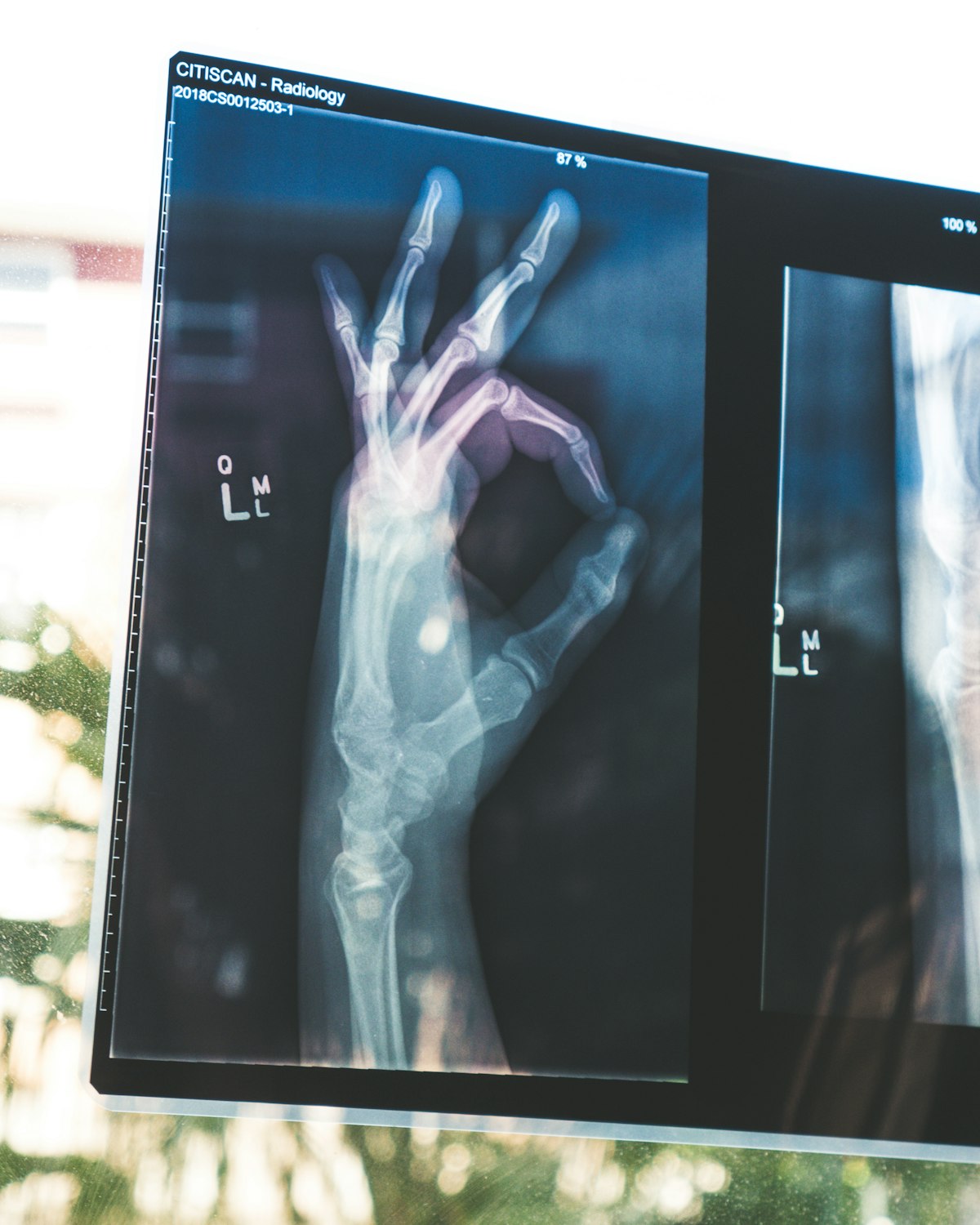
The marketing is still ahead of the reality. AI-assisted diagnosis from X-rays and imaging works in controlled hospital settings with specific equipment and trained radiologists reviewing outputs. For a general practice or dental clinic, the use case is narrow.
The liability question remains: If an AI suggests a diagnosis that the doctor relies on and it is wrong, who is liable? Until India has clear regulatory guidance on AI-assisted clinical decisions — which is not expected before 2027 at the earliest — most doctors are right to treat diagnostic AI as a "second opinion" tool at best.
Predictive Treatment Recommendations
"AI that recommends treatment plans based on patient history and outcomes data" sounds revolutionary. In practice, treatment recommendations are highly individualised, depend on factors AI cannot observe (patient financial situation, personal preferences, comorbidities documented elsewhere), and carry significant medicolegal risk if followed blindly.
No credible AI vendor in India is claiming their system should replace clinical judgement for treatment planning. If someone is making that claim, they are either ignorant of the medical reality or they are marketing aggressively.
Full-Automation Patient Chatbots
Chatbots that claim to handle end-to-end patient interactions without human intervention are overselling. The technology handles scripted booking flows well. The moment a patient asks a question outside the script — which happens in 30-40% of interactions — the bot either fails silently or gives a wrong answer.
The optimal model remains: AI for first-contact triage and routine queries, immediate human handoff for anything non-standard. Pure automation without human fallback creates patient frustration and missed revenue.
How ABDM and India's Health Stack Intersect with AI
The Ayushman Bharat Digital Mission is creating infrastructure that will make AI more powerful over time. When patient health records are interoperable across providers — which ABDM is building toward — AI will be able to analyse a patient's complete health history across multiple doctors and facilities.
In 2026, ABDM adoption is still early. About 15-20% of private clinics are actively registering and linking patient ABHA IDs. The clinics that are ABDM-ready now will benefit first when the data network reaches critical mass.
Practical advice: Ensure your clinic software is ABDM registered and supports ABHA ID linking. This is a free future investment. For the full EMR/EHR context, see our EMR vs EHR guide for Indian clinics.
The Buying Framework for AI in Healthcare Software
When evaluating AI claims from software vendors, use this 4-question framework:
1. What specific daily task does this AI feature automate? If the answer is vague ("improves efficiency"), it is marketing. If specific ("predicts no-shows with 82% accuracy"), it is a real feature.
2. What is the measurable outcome after 30 days? Real AI features have measurable outcomes. Ask for case studies with specific numbers from Indian clinics.
3. What data does the AI need and where does it come from? AI is only as good as its training data. A system that has been running on thousands of Indian clinic data points will outperform one trained on Western healthcare datasets.
4. What happens when the AI is wrong? Every AI feature has a failure mode. Smart billing alerts might flag a correct invoice. No-show prediction might incorrectly flag a reliable patient. The system should have clear override mechanisms and learn from corrections.
The "AI Helps, Does Not Replace" Philosophy
This deserves its own section because it is the single most important principle for AI in healthcare.
AI in Indian clinics should be invisible infrastructure. The doctor should not "use AI" — they should use software that happens to be AI-powered. The receptionist should not "manage AI" — they should send reminders that happen to be intelligently timed.
The moment AI becomes a visible, separate thing that requires management, training, and oversight, it has failed its purpose. The best AI features are the ones nobody talks about because they just work in the background.
Every AI feature at Ortix is designed with this philosophy. The AI clinic assistant guide covers the specific features and how they integrate into daily workflows without disruption.
What to Do Right Now
If you are a clinic owner evaluating AI in 2026, here is the priority list:
- 1Implement Tier 1 features immediately — automated reminders with no-show prediction, natural language analytics, billing intelligence. These have proven ROI and every month you delay is revenue lost.
- 2Trial Tier 2 features selectively — voice transcription if you are a heavy note-taker, communication AI if you have 50+ daily patients.
- 3Ignore Tier 3 features for now — diagnostic AI, treatment recommendation AI, and full-automation chatbots. Watch them, but do not pay a premium.
- 4Ensure ABDM readiness — free to set up, positions you for the future.
The clinics that are winning with AI in 2026 are not the ones with the most advanced features. They are the ones who implemented three or four simple, proven features and let them run consistently. Start there.
Frequently Asked Questions
Is AI in healthcare regulated in India?
As of 2026, India does not have specific AI-in-healthcare regulations. The Digital Personal Data Protection Act (DPDPA) governs data handling, and the Medical Council of India guidelines on telemedicine provide some framework. Dedicated AI healthcare regulation is expected by 2027-2028. Until then, treat AI outputs as advisory, not authoritative.
How much does AI clinic software cost compared to non-AI alternatives?
The price gap has narrowed significantly. In 2026, AI-powered clinic software costs ₹5,000-₹10,000/month, while basic non-AI alternatives cost ₹2,000-₹5,000/month. The 2-3x price difference is typically recovered within the first month through billing accuracy and no-show reduction alone.
Will AI replace clinic receptionists?
No. AI handles repetitive, pattern-based tasks: reminders, billing alerts, report generation. Complex patient interactions, empathy, and judgment still require humans. The receptionist role shifts from data entry to patient relationship management — which is actually more valuable for the clinic.
Does AI clinic software require high-speed internet?
Standard 4G or broadband (10 Mbps+) is sufficient for cloud-based AI features. Voice transcription benefits from faster connections but works adequately on 4G. AI processing happens on cloud servers, not on your local device, so hardware requirements are minimal.
How long before AI features show measurable impact?
Automated reminders with no-show prediction: 2-3 weeks. Billing intelligence: 30-45 days (needs historical data). Natural language analytics: immediate if historical data exists. Voice transcription: accuracy improves over 2-4 weeks as the system learns your terminology.
Should I wait for AI technology to mature before investing?
No. Tier 1 features (reminders, analytics, billing alerts) are mature and proven. Every month you wait is money lost to no-shows and billing leaks. The clinics that started using AI in 2024-2025 now have 12-18 months of data advantage that makes their AI features more accurate than new adopters.
Can AI help with government scheme compliance like Ayushman Bharat?
Indirectly, yes. AI-powered billing systems can auto-generate reports in formats required for government scheme reimbursement. ABDM-integrated systems with AI can streamline ABHA ID linking and health record sharing. This reduces the administrative burden of scheme participation significantly.
About the Author
Dr. Vikram Patel
MBBS, MBA — 12 years in clinic operations
Dr. Vikram Patel has spent 12 years optimising clinic operations across Mumbai, Pune, and Ahmedabad. He consults for multi-specialty practices on patient retention and revenue growth.
Ready to modernise your practice?
Start your 14-day free trial of Ortix
Join thousands of clinics using Ortix to cut no-shows, recover billing revenue, and save 2+ hours daily on admin.
No credit card required · Cancel anytime